Austell & I-20 Night Work Playbook: Local Compliance Rules & Right Cat Light Towers for the Job
Working while the sun is down presents its own sort of challenges. You have to worry about noise limits, permit rules, and visibility issues. It’s important to know the rules before your job starts to make sure you use the right equipment to get the job done quickly and correctly.
The right equipment for night work always includes a light tower, so you have visibility to do the work you need to do. Construction night work in Georgia involves mixed residential and commercial surroundings that pose serious noise concerns. Traffic volumes on I-20 push a lot of contractors into overnight closures to minimize daytime disruption.
Local Compliance Rules to Know Before You Start
Because Georgia does not have a statewide noise law, local regulations are determined entirely at the city or county level. This means contractors must stay vigilant and check specific area rules before breaking ground. The metro Atlanta area typically enforces much stricter nighttime noise limits and restricted construction hours.
Navigating these projects also requires a solid grasp of the Cobb County lane and road closure permitting process and documentation. Anyone working on state routes and interstates must closely follow GDOT lane-closure permit rules, which include meeting strict minimum notice periods.
Getting a Night Work Permit for This Corridor
When you apply for a night work permit, there’s a particular process that you must go through. When applying for a permit, consider your type of job and where it’s located. You can apply through GDOT’s permitting system or Cobb County Transportation.
There are varying lead-time requirements when you submit a permit request. No interstate lane closures are approved on less than 48 hours’ notice. Reviewers check detour plans, traffic control, and work zone safety measures. You should always keep your permit and variance paperwork on hand for inspections.
Why Lighting Becomes a Compliance Issue at Night
Lighting and work-zone visibility is an important component of an approved traffic control plan. Poor lighting affects work quality and crew safety, and it can trigger failed inspections and permit pushback.
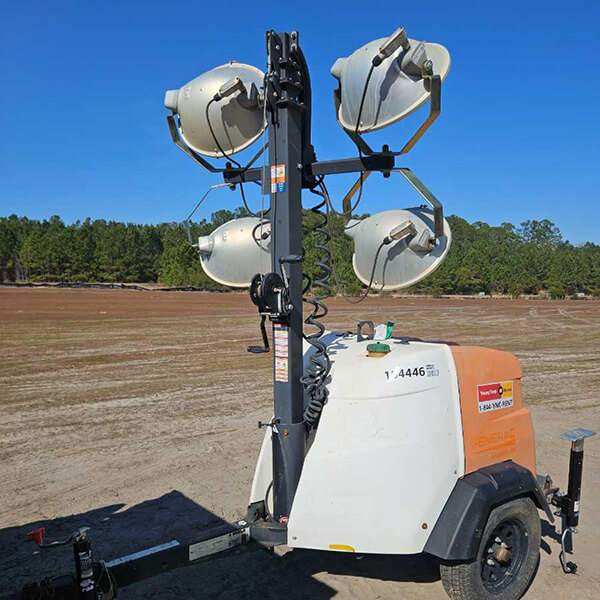
Meeting strict night work zone lighting requirements involves balancing mast heights and coverage areas for shoulder work versus full lane closures. To stay fully compliant with GDOT rules, local noise ordinances, and Cobb County lane closure permit conditions, crews can simplify operations with a dependable Cat light tower rental.
Matching the Job to the Right Cat Light Tower
Choosing the right equipment for a job involves balancing several factors to ensure overnight shifts run smoothly. Operators must first weigh the differences between LED and metal-halide options, considering how brightness, fuel efficiency, and overall runtime match up with the demands of an overnight shift.
Beyond the bulb type, matching the equipment requires calculating the exact lumens and acreage needed to properly light a workspace. Because overnight construction crews often have to move quickly between locations, utilizing tow-behind, quick-relocate setups makes shifting sites much easier. Finally, checking the fuel tank size ensures the unit can handle a full shift from start to finish without needing an inconvenient mid-shift refuel.
Renting Cat Light Towers for Austell/I-20 Jobs
When planning for Austell and I-20 jobs, securing the right equipment ahead of time is key for a smooth operation. You will want to reserve your light towers well in advance of any scheduled night closure to avoid last-minute scrambles.
Contact Yancey today to find the right Cat light towers for your night work job.
Posted on October 1, 2026