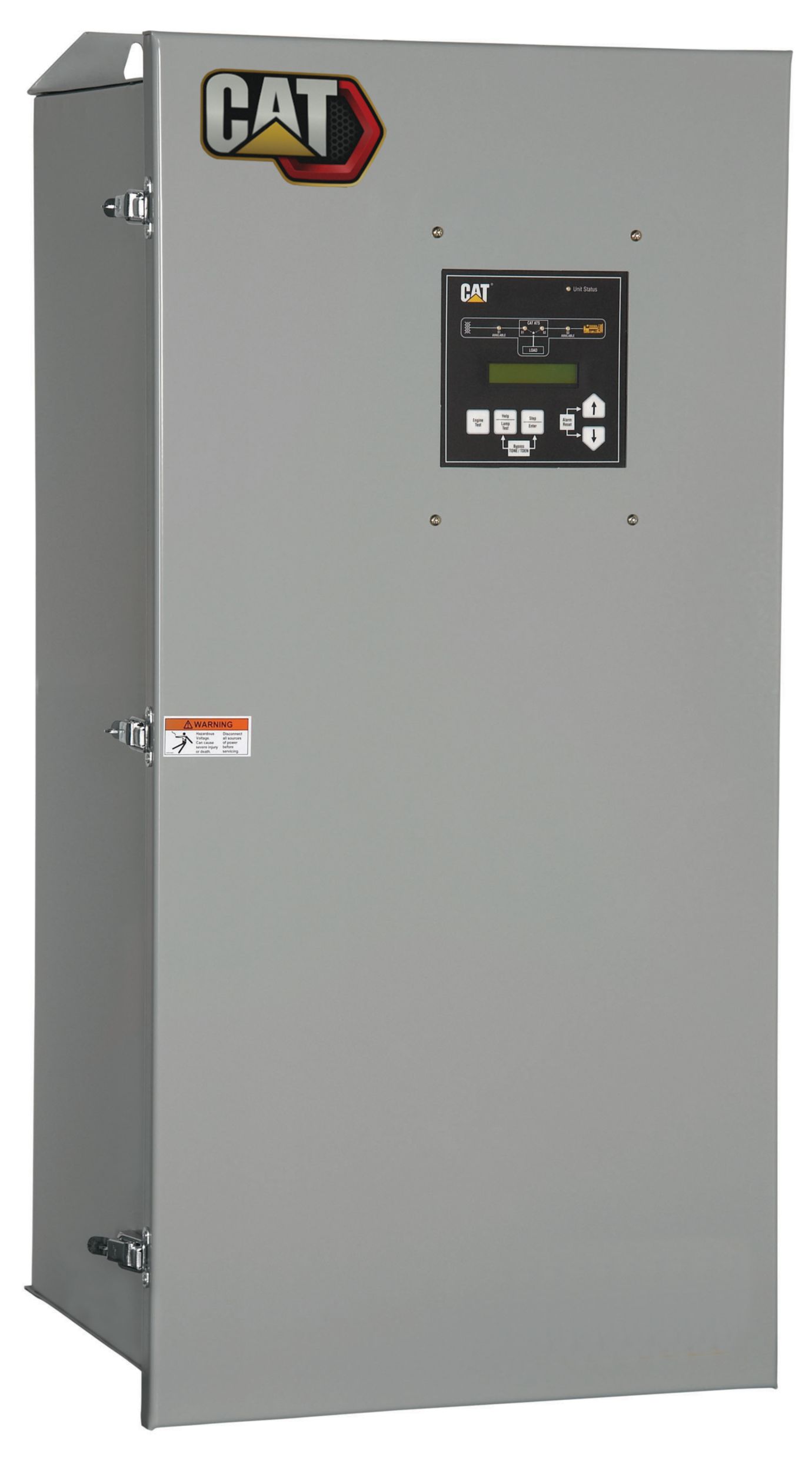
New ATC Service Entrance Rated MCCB & Power Breaker Based ATS For Sale in Georgia
ATC Service Entrance Rated MCCB & Power Breaker Based ATS

Cat® Service Entrance Rated (SER) automatic transfer switches (ATS) are designed to provide standby power emergency power to entire installation loads to protect against utility power interruption; yet allow the ATS to be as close as possible to the point of service entrance. By safely and in code compliance, integrating the necessary overcurrent protection and service disconnecting means into the automatic transfer switch, a single installation can be made at the service entrance. This design eliminates the need for a separate upstream fault protection and respective interconnections, which in turn reduces installation space, time, and cost. Breaker-based Service Entrance Rated transfer switches are available from 30A to 5000A.

Get Pricing
Rating Range 30-5000A
Transfer Type Open / Closed / Delayed
Switch Type Molded Case and Power Breaker
MCCB 30-1000A 2, 3, or 4 Pole
Fixed Mount Power Breaker 200-3200A 2, 3, 4-Pole
Drawout Power Breaker 200-5000A 2, 3, or 4-Pole
System Voltage Application 120-600 Vac 50/60 Hz
Withstand (Power Breaker) Up to 100 kAIC at 600V 3 cycles
Applicable Testing <CSA C22.2 No. 178 certified</br><br> UL 1008 listed up to 3200A</br><br>4000A, and 5000A UL 891 listed</br>

  • ATC-100 on Residential & Light Commercial MCCB based, ATC-300+ or ATC-800 on MCCB & Power Breaker ATS products
  • UL 1008 service entrance listed (up to 3200A)
  • Service disconnect (both off) capability
  • Integral over current protection
  • Lockout when in disconnected position (only)
  • Service entrance labeled
  • Integrated Design
  • Disconnecting neutral assembly
  • Ground fault protection capability (all ratings)
    (Required by code on rating 480V, and 1000A or higher)
  • Keyed service entrance switch
  • Draw-out type breakers (available on Power Breaker ratings)
  • UL 891 for 4000-5000A
  • Loads protected against extended power loss
  • Quick restoration of the circuit after a trip (versus a fused circuit that requires fuse availability)
  • Trip on a fault prohibits transfer to the emergency source
  • Fused circuit allows switch testing by simulating an actual power failure
  • Lockable disconnect position permits safe downstream maintenance